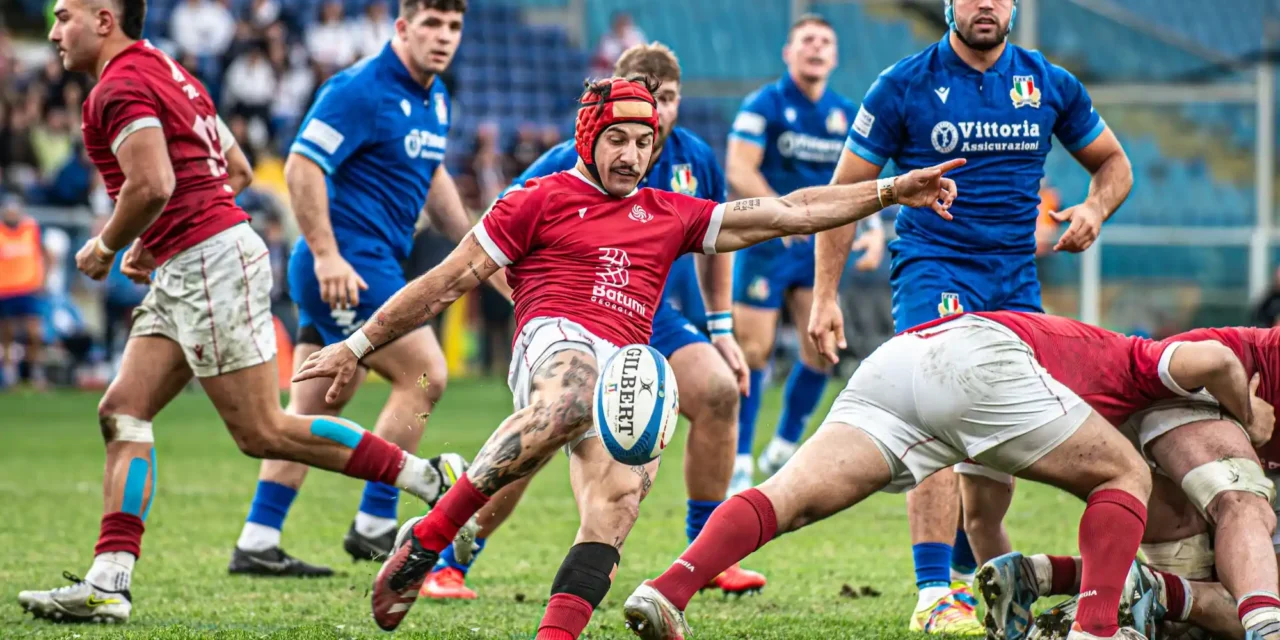
Georgia vs Italy, Autumn Nations Series 2024. Photo by Stefano Delfrate, licensed under CC BY-SA 2.0.
Intro
In Europe’s rugby landscape, no team outside the Six Nations has made more noise than Georgia. Known for their physicality, passionate supporters, and dominant forward pack, The Lelos have built a reputation as the “sleeping giant” of the northern hemisphere.
For years, Georgia has dominated the Rugby Europe Championship, consistently outperforming rivals such as Romania, Spain, and Russia. Their success has sparked debate across the rugby world: should Georgia be given a chance to step up and challenge the Six Nations elite?
While they may not yet have the financial clout or fanbase of Europe’s traditional rugby powers, Georgia’s story is one of persistence, growth, and ambition. From their Soviet-era roots to their increasingly competitive World Cup showings, the Lelos’ journey reflects the wider rise of emerging rugby nations and their fight for recognition on the biggest stage.
History & Rise
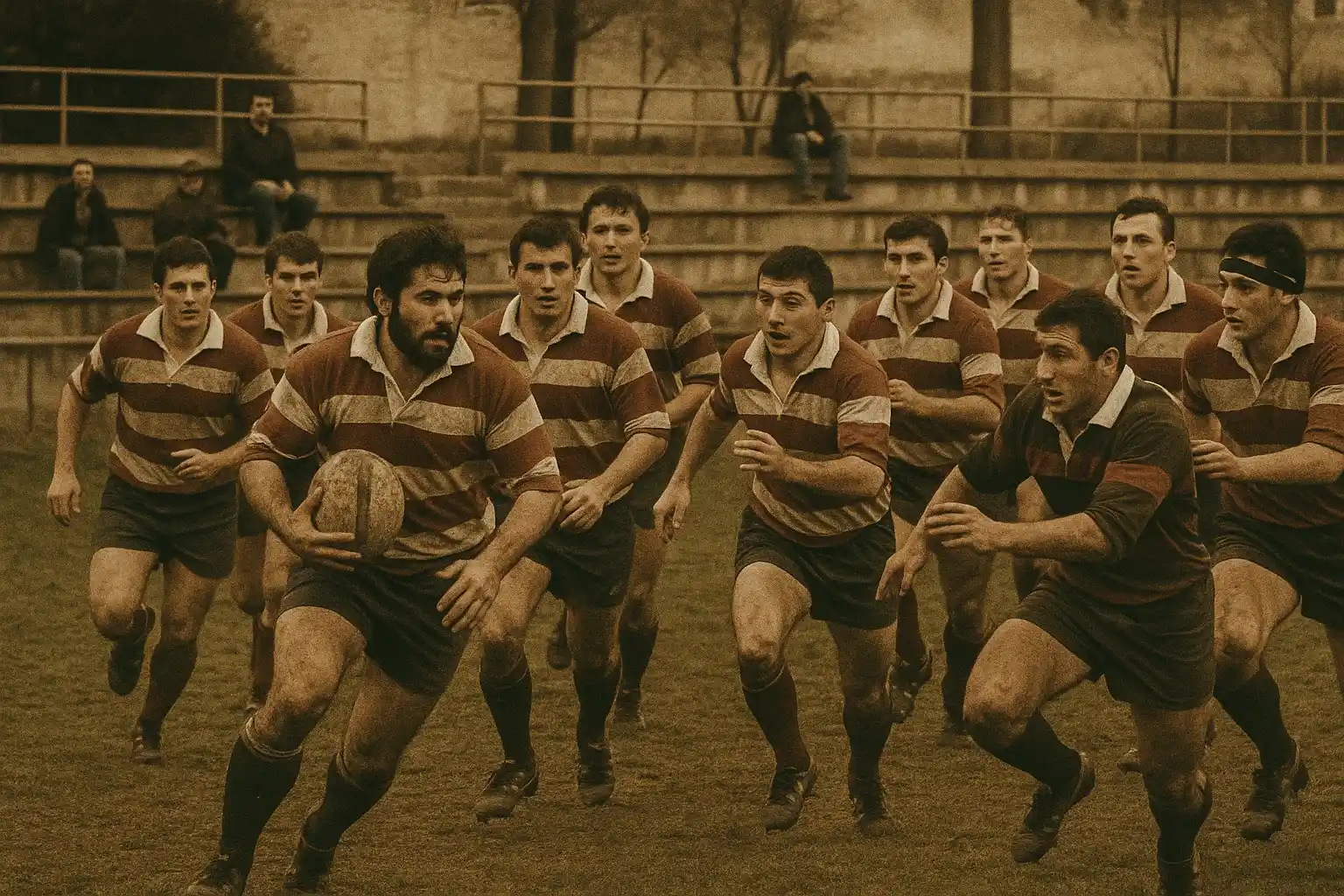
Rugby in Georgia grew from humble beginnings in the 1990s into a national sport.
Rugby in Georgia has its roots dating back to the 1920s, when the game was introduced during the Soviet era. Initially overshadowed by wrestling and weightlifting, sports that suited Georgia’s physical traditions, rugby gradually took hold among students and military communities.
By the 1960s and 1970s, rugby clubs had been established across Tbilisi and other cities, competing in Soviet competitions and laying the foundation for a strong domestic culture. Following the collapse of the Soviet Union in 1991, Georgia emerged as an independent rugby nation, quickly establishing itself as a significant force in Eastern Europe.
The defining characteristic of Georgian rugby has always been its forwards. Rooted in the nation’s love of strength sports, Georgia developed a reputation for producing some of the toughest scrummagers in the world. Their pack became their calling card, earning respect and sometimes fear from opponents at every level of the game.
Georgia’s breakthrough came in the late 1990s and early 2000s, when the Lelos began to outperform their European peers consistently and qualified for their first Rugby World Cup in 2003. Since then, they’ve become tournament regulars, building steadily toward a position as one of rugby’s most consistent emerging nations.
World Cup Performances
Georgia made their Rugby World Cup debut in 2003, taking on giants like England and South Africa in Australia. Although they failed to secure a win, their courage and commitment earned them respect, and their passionate supporters announced Georgia’s arrival on the global stage.
The breakthrough came four years later in France, at RWC 2007. In a bruising encounter in Lens, the Lelos secured their first-ever World Cup victory, defeating Namibia 30–0. They also pushed Ireland to the brink in Bordeaux, losing just 14–10 in a match that showed they could go toe-to-toe with Tier One nations.
From that point on, Georgia became a permanent fixture in the World Cup. Their defining strength, the forward pack, grew into one of the tournament’s most feared scrums. In 2011 and 2015, they registered wins over Romania, Namibia, and Tonga, confirming their status as the kings of Tier Two rugby.
At RWC 2019 in Japan, Georgia once again beat Uruguay convincingly but struggled against the Tier One nations in their pool. Their inability to translate dominance against fellow Tier Two sides into results against the top tier remained a challenge.
The 2023 World Cup in France brought mixed fortunes. Georgia drew with Portugal 18–18 in a thrilling contest that highlighted both the rise of the Lelos and the increasing depth of emerging nations. While they didn’t secure a win, their performances were combative, and once again, they proved that they belong at rugby’s biggest showpiece.
Across six consecutive tournaments, Georgia has gone from plucky debutants to respected competitors. Their World Cup record might not yet include scalps of Tier One heavyweights, but their consistency has cemented their reputation as Europe’s leading nation outside the Six Nations.
The Six Nations Debate
Few topics in European rugby spark more discussion than the question: Should Georgia join the Six Nations?
Since their rise in the 2000s, Georgia have dominated the Rugby Europe Championship, the “second-tier Six Nations”, winning it almost every year and often by large margins. Their superiority over rivals like Romania, Spain, and Russia has led many to argue that the Lelos deserve a chance to step up.
Supporters of Georgia’s inclusion point to several factors:
-
Consistent Success: Georgia are the undisputed kings of Europe outside the Six Nations.
-
World Cup Credibility: They’ve proven capable of competing with Tier One nations, particularly through their powerful scrum.
-
Growing Rugby Culture: Rugby has become one of Georgia’s most popular sports, attracting passionate fans and national pride.
However, the case against their inclusion is equally strong. Critics argue that the Six Nations is not just a competition. Still, Georgia is also a commercial powerhouse, but it lacks the market size, sponsorship potential, and TV audience to justify expansion or promotion/relegation. Logistics also play a role; hosting games in Tbilisi presents travel and financial challenges for Six Nations unions.
As a compromise, some have suggested integrating Georgia into competitions like the Autumn Nations Series or offering them more regular fixtures against Tier One opposition. This would give the Lelos the exposure they need without altering the Six Nations’ traditional structure.
What’s clear is that Georgia’s continued growth makes the debate impossible to ignore. While they may not yet be Six Nations-ready from a commercial standpoint, on the field, they have proven time and again that they deserve more opportunities at the highest level.
Key Players & Stars
Behind Georgia’s rise are players who have not only defined the team’s identity but also left their mark on the wider rugby world. From inspirational leaders to explosive new talents, the Lelos have produced figures who embody their fearless, physical style.
Mamuka Gorgodze – The Icon
No player symbolises Georgian rugby more than Mamuka “Gorgodzilla” Gorgodze. A towering back-row forward, Gorgodze combined raw power with relentless work rate. Over a career spanning more than a decade, he became Georgia’s most recognisable player, earning respect in France’s Top 14 with Montpellier and Toulon. His leadership and warrior spirit made him the face of Georgian rugby during its formative World Cup years.
Merab Sharikadze – The Captain
The current captain, Sharikadze, represents the next generation of Georgian leaders. A hard-tackling centre with experience in France, he has led by example, instilling discipline and defensive steel into the side. Under his leadership, Georgia have become more structured, balancing their traditional forward dominance with backline organisation.
Davit Niniashvili – The Rising Star
If Gorgodze was Georgia’s past and Sharikadze its present, then Davit Niniashvili is undoubtedly its future. Still in his early 20s, the dynamic fullback/wing has become one of the most exciting young talents in European rugby. Playing for Lyon in France’s Top 14, Niniashvili combines pace, agility, and flair, qualities that mark him as the type of player who can help Georgia evolve from a one-dimensional pack-driven side into a more balanced attacking force.
The French Connection
Like Portugal, much of Georgia’s progress has been fuelled by players gaining professional experience in France. The Top 14 and Pro D2 have become a second home for Georgian forwards in particular, with scrummagers and back-rowers highly prized for their strength and work ethic. This pipeline of overseas experience has raised the standard of the national side, ensuring Georgia are better prepared for test rugby than ever before.
Together, these players, past, present, and future, showcase the evolution of Georgian rugby. From Gorgodze’s ferocity to Niniashvili’s flair, the Lelos now have both the muscle and the magic to make a lasting impact on the world stage.
Challenges Still Facing Georgia Rugby
Despite their progress, Georgia’s journey is still marked by obstacles that threaten to slow their rise. The Lelos have demonstrated their ability to dominate Tier Two rugby, but transforming that dominance into a lasting Tier One status requires overcoming several significant challenges.
Limited Fixtures Against Elite Teams
Perhaps Georgia’s biggest frustration is the lack of regular matches against Tier One opposition. Without consistent exposure to the best sides, the Lelos struggle to develop the tactical depth and squad depth needed to take the next step. A one-off World Cup match every four years is not enough to close the gap.
Commercial & Market Limitations
While rugby is hugely popular in Georgia, it remains a small market compared to Six Nations heavyweights like England or France. Limited sponsorship opportunities, smaller TV audiences, and reduced financial clout make it harder to argue for their inclusion in commercially driven tournaments. This lack of funding also affects infrastructure and grassroots development.
Domestic Pathways
Although Georgia produces world-class forwards, much of their player development happens abroad in France’s Top 14 and Pro D2. Domestic competitions in Georgia remain semi-professional and struggle to retain top talent. Without a stronger domestic league, the country will continue to rely on foreign systems to prepare its players.
Evolving Playing Style
Georgia’s reputation as a powerhouse scrum nation has brought them success, but modern rugby increasingly demands versatility. Teams that can only dominate up front risk being outpaced by those with balanced backlines. Developing a more dynamic attacking game is critical if Georgia wants to compete consistently at the highest level.
Funding Grassroots Growth
At the youth and community levels, rugby faces competition from football and other sports. While the passion is there, facilities and coaching structures lag. Building sustainable grassroots programs will be essential to ensure a pipeline of talent beyond the current generation.
Georgia’s challenges are not insurmountable; in fact, they are the same hurdles faced by many emerging rugby nations. But if the Lelos are to fulfil their potential as Europe’s “seventh nation,” they must address these issues head-on while continuing to push for greater opportunities on the international stage.
The Road to Rugby World Cup 2027
As the countdown to Rugby World Cup 2027 in Australia begins, Georgia find themselves at a crossroads. They have established themselves as the dominant force in European Tier Two rugby, but the next step is to prove that they can consistently challenge and beat stronger opposition.
Qualification Pathway
Georgia’s route to the World Cup will once again run through the Rugby Europe Championship, a competition they have made their own. While qualification is almost a formality given their dominance, the real test lies in how they perform in preparation matches and on the world stage itself.
The Golden Generation
The Lelos enter this cycle with a mix of seasoned leaders and emerging stars. Merab Sharikadze will continue to guide the team with his defensive steel, while rising talents like Davit Niniashvili represent a new, more dynamic dimension to Georgia’s attack. Combined with their traditional forward power, this blend gives them one of their most balanced squads ever.
Strategic Evolution
For Georgia to take the next step in 2027, it must evolve tactically. Expanding their attacking repertoire beyond the scrum and maul will be key. Coaches and players alike know that Tier One defences can withstand power alone; breaking through will require creativity, speed, and clinical finishing.
Ambitions in Australia
Georgia’s goal for 2027 will not just be to compete, but to secure landmark victories. A win against a Tier One nation on the World Cup stage would validate years of progress and strengthen their case for greater inclusion in elite competitions. For their players, coaches, and passionate supporters, 2027 represents the opportunity to finally step out of the shadows and prove that the “sleeping giant” of European rugby is fully awake.
Why Georgia Matters for World Rugby
Georgia’s rise is not just about one nation chasing glory, it is about the evolution of the sport itself. In a game still dominated by traditional powers, the Lelos represent the possibility of meaningful change.
Proof of Depth in European Rugby
For too long, European rugby has been seen as a closed shop, with the Six Nations defining the continent’s story. Georgia challenges that narrative. Their success in the Rugby Europe Championship shows there is real depth beyond the established elite, and that Europe has more to offer than its familiar rugby giants.
The Case for Expansion
World Rugby has long been under pressure to expand opportunities for emerging nations. Georgia’s progress strengthens the call for greater inclusivity, whether through more test matches, expanded tournaments, or eventually a place at the Six Nations table. Their presence would not only reward performance but also inject fresh energy into competitions at risk of stagnation.
Cultural Impact
Rugby in Georgia has grown from a niche pursuit to a source of national pride. On match days in Tbilisi, stadiums fill with passionate fans who see the sport as an expression of strength, resilience, and national identity. This kind of cultural integration is invaluable for rugby’s global image and proves that the game can thrive outside its traditional heartlands.
Inspiration for Other Nations
Perhaps most importantly, Georgia’s story offers hope to other emerging rugby countries. From Chile to Spain to Kenya, the Lelos have shown that with the right blend of talent, organisation, and persistence, it is possible to rise through the ranks and demand respect on the world stage.
In short, Georgia matters because their success signals a healthier, more diverse future for rugby. They remind us that the sport grows stronger when more nations are invited to the table, and when the so-called minnows are given the chance to roar.
Conclusion
From Soviet-era obscurity to Rugby World Cup regulars, Georgia’s story is one of determination, pride, and relentless ambition. The Lelos have built their reputation on scrummaging power and national passion. Still, today they represent much more: a nation striving to evolve, to challenge the elite, and to carve out a permanent place on rugby’s biggest stage.
Their dominance in the Rugby Europe Championship, their growing influence at World Cups, and their calls for greater opportunities make Georgia a force to be reckoned with. They may not yet have broken down the doors of the Six Nations, but their persistence ensures the debate will only grow louder in the years ahead.
As the Rugby World Cup 2027 approaches, Georgia stands at a defining moment. With a golden generation of talent led by seasoned captains and exciting new stars, the Lelos are ready to prove that they are more than a Tier Two powerhouse; they are a rising force in world rugby.
At Rugby Rising, we’ll be following every step of that journey. From player spotlights to Six Nations debates, we’ll bring you the stories that matter most from rugby’s sleeping giant.
Explore more in our Georgia Rugby hub for the latest news, features, and analysis. Don’t miss out, join the Rugby Rising Wrap newsletter to stay connected with the rise of the Lelos and other emerging nations.